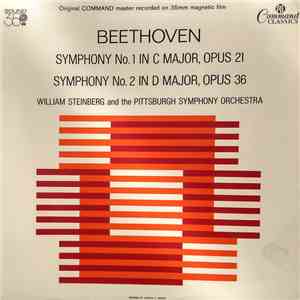
Beethoven - The Great Musicians No. 6 - Beethoven (Part Two) album flac
 Performer: Beethoven
Title: The Great Musicians No. 6 - Beethoven (Part Two)
Released: 1969
MP3 album: 1408 mb
FLAC album: 1812 mb
Rating: 4.4
Other formats: AAC VOX XM DTS MIDI MOD VOX
Genre: Classical
The Symphony No. 6 in F major, Op. 68, also known as the Pastoral Symphony (German: Pastorale), is a symphony composed by Ludwig van Beethoven and completed in 1808. One of Beethoven's few works containing explicitly programmatic content, the symphony was first performed in the Theater an der Wien on 22 December 1808 in a four-hour concert. Beethoven was a lover of nature who spent a great deal of his time on walks in the country. He frequently left Vienna to work in rural locations.
Symphony No. 6 (Beethoven). Part of a sketch by Beethoven for his Symphony No. 6. The Symphony No. 68, also known as the Pastoral Symphony (German Pastoral-Sinfonie), is a symphony composed by Ludwig van Beethoven, and completed in 1808. The cello section is divided, with just two players playing the flowing-water notes on muted instruments, with the remaining cellos playing mostly pizzicato notes together with the double basses. Toward the end of the movement there is a cadenza for woodwind instruments that imitates bird calls. Beethoven helpfully identified the bird species in the score: nightingale (flute), quail (oboe), and cuckoo (two clarinets). The following audio of the second movement was recorded in London by the BBC Symphony Orchestra under the direction of Arturo Toscanini: Part IV, Second Movement (3:32).
Top 50 Beethoven Classics - The Very Best Of Classical Music. 6 (Beethoven), The Symphony No 6 in F major, Op 68, also known as the Pastoral Symphony German: Pastorale1, is a symphony composed by Ludwig van Beethoven, an. Portrait of Beethoven in 1804, when he had been working on the Sixth Symphony for two years. Beethoven was a lover of nature who spent a great deal of his time on walks in the country He frequently left Vienna to work in rural locations. The first sketches of the Pastoral Symphony appeared in 1802 It was composed simultaneously with Beethoven's more famous-and more fiery-Fifth Symphony Both symphonies were premiered in a long and under-rehearsed concert in the Theater an der Wien in Vienna on 22 December 1808.
Shop with confidence. Beethoven Symphony N. - The Great Musicians Beethoven Part 1 + 10 LP. £. 9.
Beethoven - All Symphonies. Symphony No. 68, "Pastoral": I. Pleasant, cheerful feelings aroused on approaching the countryside: Allegro ma non troppo - Bela Drahos.
Ludwig van Beethoven was a German composer and the predominant musical figure in the transitional period between the Classical and Romantic eras. Who Was Ludwig van Beethoven? Ludwig van Beethoven (December 16, 1770 to March 26, 1827) was a German pianist and composer widely considered to be one of the greatest of all time. His innovative compositions combined vocals and instruments, widening the scope of sonata, symphony, concerto and quartet. He is the crucial transitional figure connecting the Classical and Romantic ages of Western music. The second movement is often performed separately from the rest of the symphony and may have been one of Beethoven’s most popular works. Debuting in 1824, this Catholic mass is considered among Beethoven’s finest achievements.
Beethoven composes the Cantata on the Death of Joseph II, and the Cantata on the Elevation of Leopold II. The musicians of the electoral orchestra refuse to perform the first, claiming it is unplayable. December: Haydn passes through Bonn on his way to London. He meets Beethoven, who shows him his scores of the two Cantatas. Haydn, impressed, encourages him to come to Vienna where, he promises, he will take him on as a pupil. 1791 The Ritterballet. Beethoven composes music for The Creatures of Prometheus. Beethoven's great friend from his childhood in Bonn, Stephan von Breuning, moves to Vienna. 29 June: In a long letter to his old friend Dr Franz Wegeler in Bonn, Beethoven mentions his deafness for the first time for the last three years my hearing has become worse. 26 July: Elector Max Franz dies at Hetzendorf, Vienna.
Tracklist
| Symphony No. 1 In C Major, Opus 21 | |
| A1 | Adagio Molto - Allegro Con Brio |
| A2 | Andante Cantabile Con Moto |
| B1 | Minuet: Allegro Molto E Vivace |
| B2 | Adagio - Allegro Molto E Vivace |
Credits
- Composed By – Ludwig van Beethoven
- Conductor – Sir Charles Groves
- Liner Notes – Robert Simpson
- Orchestra – The Royal Philharmonic Orchestra