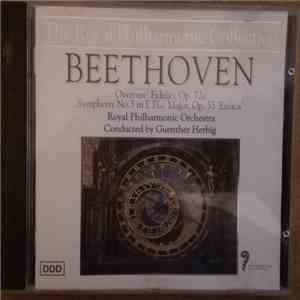
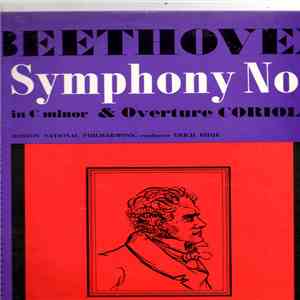
Joseph Machlis, Norman Rose - Ludwig Van Beethoven in Words and Music album flac
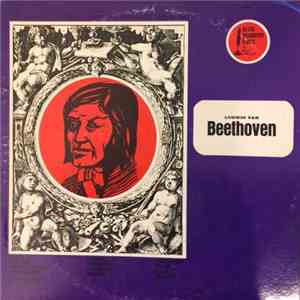 Performer: Joseph Machlis
Title: Ludwig Van Beethoven in Words and Music
Country: US
MP3 album: 1295 mb
FLAC album: 1446 mb
Rating: 4.2
Other formats: MIDI MMF VQF MP2 DXD FLAC MP3
Genre: Classical
Complete your Joseph Machlis, Norman Rose collection.
Ludwig van Beethoven (/ˈlʊdvɪɡ væn ˈbeɪt(h)oʊvən/ (listen); German: (listen); baptised 17 December 1770 – 26 March 1827) was a German composer and pianist. A crucial figure in the transition between the classical and romantic eras in classical music, he remains one of the most recognized and influential musicians of this period, and is considered to be one of the greatest composers of all time.
Ludwig van Beethoven Biography. Pianist, Composer (c. 1770–1827). Ludwig van Beethoven was a German composer and the predominant musical figure in the transitional period between the Classical and Romantic eras. Who Was Ludwig van Beethoven? Ludwig van Beethoven (December 16, 1770 to March 26, 1827) was a German pianist and composer widely considered to be one of the greatest of all time. His innovative compositions combined vocals and instruments, widening the scope of sonata, symphony, concerto and quartet . The symphony's famous choral finale, with four vocal soloists and a chorus singing the words of Friedrich Schiller's poem "Ode to Joy," is perhaps the most famous piece of music in history.
Ludwig van Beethoven was born in Bonn, Germany and was baptized on December 17, 1770. He was the descendant of two generations of the court musician, Ludwig van Beethoven, his grandfather and Johann van Beethoven, his father. Beethoven’s father cruelly made him practice music every night until the morning next day so that he could claim Beethoven as a profitable child prodigy like Mozart at a time. After his mom died, Beethoven at the age of nineteen had to look after his two younger brothers and a father who had become an alcoholic. At the age of twenty-second, Beethoven decided to move to Vienna to live and studied with Franz Joseph Haydn but because of Haydn’s busy life as a famous composer Beethoven soon moved to study with other composers.
Ludwig van Beethoven (17 December 1770 – 26 March 1827) was a German composer and pianist. Composer: Beethoven, Ludwig van. Opus/Catalogue Number: Piano Sonata N., O. 4 N. Publisher Information: L. Beethoven. Publishing House Muzyka Moscow 1965.
Ludwig van Beethoven was one of the greatest composers in musical history. He was born in Bonn, Germany in 1770. Both his father Johann and his grandfather Ludwig were musicians. They gave him money to live and study. In Vienna Ludwig also met Joseph Haydn and became his pupil for a short time. The Viennese thought that Beethoven was a strange man with his untidy appearance. He had wild black hair and lived by his own rules. During his time in Vienna he became more and more famous, gave great concerts and went on tours to Berlin and Prague. In the late 1790s Beethoven discovered that he was slowly becoming deaf. This became a great crisis in his life. But it was during this time that Ludwig van Beethoven wrote the best works of his life.
Music Composer Beethoven Ludwig van Beethoven was one of the most famous German composers who played a huge role in pioneering the transition of music from the classical era to the Romantic era. His work in concerto, symphony, sonata, and quartet is considered instrumental in expanding both the scope and reach of music. He also came up with a new way of combining vocals and instruments. Beethoven struggled with auditory decline for most of his life, and was nearly deaf toward the end. Interestingly. More about Composer Report: Ludwig Van Beethoven Essay.
What did Ludwig van Beethoven compose? Beethoven composed music in the transitional period between the Classical and the Romantic eras, and his work has been divided into (roughly) three periods. The first period, between 1794 and 1800, is characterized by traditional 18th-century technique and sounds. The second period, between 1801 and 1814, is marked by an increased use of improvisatory material. Beethoven was not born deaf, but he gradually became deaf. Although his deafness did not become total until 1819, the first symptoms of the impairment manifested before 1800. Early on, Beethoven reported hearing buzzing and ringing in his ears. Later he disclosed that from a distance I do not hear the high notes of the instruments and the singers’ voices. Beethoven’s hearing loss didn’t stop him from composing music, though.
Ludwig van Beethoven began his music training under with his father, learning clavier and violin from him, from the age of five. However, the experience was not at all a happy for the young boy, who was regularly flogged and locked in the cellar for slightest mistakes. Even if he hesitated, his father, who wanted to make another Mozart out of him, would beat him up brutally, yelling he was an embarrassment to the family. Weeping, the boy would continue to play while standing on a tool to reach the keys. He had himself said "Music comes to me more readily than words. In 1781, he was withdrawn from school to study composition with court organist, Christian Gottlob Neefe. In 1783, with Neefe’s help, Beethoven wrote his first ever composition, later called ‘WoO 63 (Werke ohne Opuszahl or Works without opus number).
Адрес: Россия, Москва, Варшавское шоссе, 25А, ст., 111. ОГРН: 1147746502892
Tracklist
| A1 | Coriolanus Overture |
| A2 | Fur Elise |
| A3 | Contradance #3 |
| A4 | Prometheus Overture |
| A5 | Symphony #1, Finale |
| A6 | Sonata Pathetique: Allegro. Adagio |
| A7 | Sonata, Quasi Una Fantasia, "Moonlight Sonata" |
| A8 | Symphony #3, "Eroica," first movement |
| B1 | Concerto for piano and orchestra #3 in C Minor, Finale |
| B2 | Symphony #7, second movement, allegretto |
| B3 | Symphony #5 in C Minor |
| B4 | Symphony #9, final movement, "Ode to Jpy" |
Credits
- Composed By – Ludwig van Beethoven
- Narrator – Norman Rose
- Written By – Joseph Machlis
Other versions
| Category | Artist | Title (Format) | Label | Category | Country | Year |
|---|---|---|---|---|---|---|
| RLP 1466 | Beethoven* - Joseph Machlis / Norman Rose | Beethoven* - Joseph Machlis / Norman Rose - A Young People's Introduction To Beethoven (LP) | Wonderland Records | RLP 1466 | US | Unknown |
| CP 441 | Joseph Machlis, Norman Rose | Joseph Machlis, Norman Rose - The Story Of Ludwig Van Beethoven in Words and Music (LP) | Colpix Records | CP 441 | US | Unknown |