A-Set - The Science of Living Things album flac
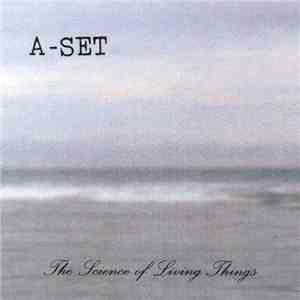 Performer: A-Set
Title: The Science of Living Things
Style: Indie Rock
Released: 1999
MP3 album: 1870 mb
FLAC album: 1371 mb
Rating: 4.4
Other formats: DMF WAV AAC AA VOX MP2 MMF
Genre: Rock
The Science Of Things is the third studio album by British band Bush, released on 26 October 1999, through Trauma Records. It is the last Bush album released through Trauma and features many electronic music influences. The album peaked at number eleven on the US Billboard 200 and has been certified platinum by the RIAA. All songs written by Gavin Rossdale.
A set of posters detailing the seven characteristics of living things. Display in the classroom to support your Science teaching. Lovely Resource for SCIENCE : Living and Non-Living. Great for Visual Support. Thank you for helping in making the Science corner look attractive. 0. Appropriate for Year 5 Australian Curriculum science lessons. I am planning a lesson that involves living and non living things, thesse posters would really help the visual learners.
Biology is a science that deals with the study of living organisms, which are divided into many specialised fields that cover their morphology, physiology, anatomy, behaviour, origin, and distribution. Science is the study of natural things around us and biology as a branch of science is derived from the Greek words bios, life and the suffix –logia, study of. Biology is a natural science concerned with the study of life andliving organisms, including their structure, function, growth, evolution, distribution, and taxonomy
Classification of Living Things. Organisms within each group are then further divided into smaller groups. These smaller groups are based on more detailed similarities within each larger group. This grouping system makes it easier for scientists to study certain groups of organisms. The most basic classification of living things is kingdoms. Currently there are five kingdoms. Living things are placed into certain kingdoms based on how they obtain their food, the types of cells that make up their body, and the number of cells they contain. The phylum is the next level following kingdom in the classification of living things.
Identifying Living and Non-living Things in Nature. Take children on a walk in the park, a garden, or neighborhood. Have them look for and point out examples of living and non-living things. Ask questions along the way such as. What makes the rock a non-living thing? What makes the grass a living thing? Where does the tree get its food? How do those flowers get water?
Living things are organisms that display the key characteristics of life. These characteristics include the ability to grow, reproduce, take in and use energy, excrete waste, respond to the environment, and possess an organized structure more complex than that of non-living things. Sometimes movement is also listed as a key characteristic of life, but many living things, such as trees, mushrooms, barnacles and coral, are incapable of movement during some or all of their life stages. Viruses, on the other hand, are a special case of an organism that is not a living thing
What is a Bear? (The Science of Living Things). Bobbie Kalman & John Crossingham. St. Catharines, ON: Crabtree, 2001. ISBN 0-86505-960-8 (pb., ISBN 0-86505-983-7 (c. Subject Heading: Bears-Juvenile literature. Grades 3-5, Ages 8-10. How Do Animals Find Food? (The Science of Living Things). ISBN 0-86505-963-2 (pb., ISBN 0-86505-986-1 (c. Subject Heading: e literature.
Biology means the study of lifeand it is the science which investigates all living things. For as long as people have looked at the world around them, people have studied biology. Even in the days before recorded history, people knew and passed on information about plants and animals. The ancient Mesopotamians even kept animals in what were the earliest zoological gardens. The ancient Greeks, too, were greatly interested in understanding the world around them. Aristotle recorded his observations of plants and animals, and his successor, Theophrastus, wrote the first books on plant life, which made a very important contribution to the study of botany. After the fall of the Roman Empire, the centre of the scientific world moved to the Middle East. The Arab scholar Al-Jahiz wrote the Book of Animalsin the 9 th century.
Living things may be distinguished from non-living things in their ability to carry on life processes such as movement, respiration, growth, responsiveness to environmental stimuli and reproduction. This view of living may be appropriate at this age but has some limitations and can lead to the alternative conceptions above. For example movement in plants is not apparent to students and consequently they may not consider plants living. For example, compare ‘a gum tree and a yabby’ rather than always referring to the differences which can be easily identified.
Tracklist
| 1 | Rosebud |
| 2 | Once upon a time |
| 3 | The coming of going |
| 4 | A voyage of |
| 5 | This flag I've raised |
| 6 | W. Division |
Barcode and Other Identifiers
- Barcode: 644110501226