The Sound Of Aircraft Attacking Britain - The Sound Of Aircraft Attacking Britain album flac
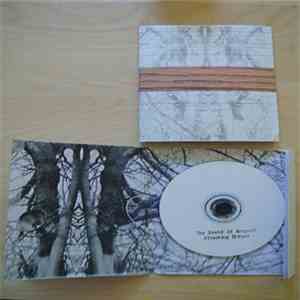 Performer: The Sound Of Aircraft Attacking Britain
Title: The Sound Of Aircraft Attacking Britain
Style: Experimental
Released: 2007
MP3 album: 1832 mb
FLAC album: 1671 mb
Rating: 4.5
Other formats: MIDI MP1 DXD ASF AA DTS VOC
Genre: Electronic
The Battle of Britain (German: Luftschlacht um England) was an effort by the German Air Force (Luftwaffe) during the summer and autumn of 1940 to gain air superiority over the Royal Air Force (RAF) of the United Kingdom in preparation for the planned amphibious and airborne forces invasion of Britain by Operation Sea Lion.
Ww2 Aircraft, Fighter Aircraft, Military Aircraft, Fighter Jets, Battle Of Britain, Aviation Art, Trains, Fighting Plane, Aircraft Painting. Commisioned illustration for Battle of Britain Combat Archive Vol. 2 by Simon Parry. 3D model by Marek Ryś (Spitfire) and Wojciech Kliment Niewęgłowski (Messerschmitt). Scene, textures and illustration by Piotr Forkasiewicz.
That pilot losses and aircraft losses were exceeding the ability of Britain to replace. The reason this open to question has more to do with the aircraft used in the initial combat- JU-87s and BF-110 fighters. Where the Stukas could reach the coast and attack the radar stations, they also were easy targets for British Hurricanes. As for the BF-110, which was intended as an escort fighter, Spitfires found them equally easy to shoot down (thirty lost in one day in August). To win the Battle of Britain the Luftwaffe would have had to pay much better attention to the Chain Home radar system. Germany didn’t really realise just how much of an advantage it gave the RAA. espite having fewer numbers they could have planes wherever they were needed within minutes, often before Germany had even crossed the coastline.
Learn about the RAF Fighter Command’s aircraft during the Battle of Britain from the Supermarine Spitfire and Hawker Hurricane, to the Bf 109 (named the best fighter in the world), the 'Flying Pencil' and the infamous ‘Stuka’. The Spitfire was the iconic aircraft of the Battle of Britain and became the symbol of British defiance in the air. Designed by Reginald Mitchell, it had an advanced all-metal airframe, making it light and strong. It took longer to build than the Hurricane and was less sturdy, but it was faster and had a responsiveness which impressed all who flew it.
Attacking out of the sun was still favoured, both because it preserved the element of surprise and because diving added speed. An alert defending fighter pilot, however, might use his attacker’s speed to his own advantage by executing a maneuver called a rudder reversal, in which he would turn and do a snap roll, suddenly reducing his forward motion so that the speeding attacker would overshoot and find the intended victim on his tail. This introduced the jet age, in which aircraft soon flew at more than twice the speed of sound (741 miles per hour at sea level and 659 miles per hour at 36,000 feet) and easily climbed to altitudes of 50,000 feet. At the same time, advanced electronics removed the task of early warning from the pilot’s eye, and guided missiles extended the range of aerial combat, at least in theory, to beyond visual range.
This documentary, originally produced by the Open University, takes a fly-on-the-wall look at RAF training for future Harrier aircrew during the 1970's. It is an excellent look at the then modern training regime. Scimitar XD248 '195/R' of 807 NAS from Lossiemouth firing a salvo of rockets in 1959.
The production of component parts for Spitfire aircraft. But the assault on the RAF started to go awry as Goering changed the emphasis of attack from radar stations and airfield to aircraft factories and more peripheral targets - thus giving RAF front line squadrons a much needed breathing space . It was a dismal failure, with the Luftwaffe losing twice as many aircraft as its potential victim.
An attack aircraft, strike aircraft, or attack bomber, is a tactical military aircraft that has a primary role of carrying out airstrikes with greater precision than bombers, and is prepared to encounter strong low-level air defenses while pressing the attack. This class of aircraft is designed mostly for close air support and naval air-to-surface missions, overlapping the tactical bomber mission. Designs dedicated to non-naval roles are often known as ground-attack aircraft. In the United States and Britain attack aircraft were generally light bombers or medium bombers, sometimes carrying heavier forward-firing weapons like the North American B-25G Mitchell and de Havilland Mosquito Tsetse.
Tracklist
| 1 | Witch Hunt Re-enactment |
| 2 | Defensive Stakes |
| 3 | Caldbec |
| 4 | Gum |
Notes
This release comes in a card wrap-around cover with paper dust jacket style wrap-around and wood effect paper binding. The paper jacket may vary but is generally printed graphics on geometric patterned paper.54 copies in existence.