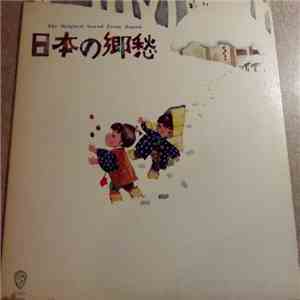
The Ensemble Nipponia - The Sounds Of Old Japan album flac
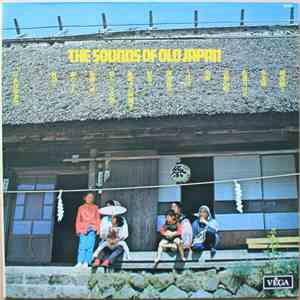 Performer: The Ensemble Nipponia
Title: The Sounds Of Old Japan
Released: 1973
MP3 album: 1358 mb
FLAC album: 1127 mb
Rating: 4.7
Other formats: AHX AU AAC ADX APE AA DTS
Genre: Folk and Country
This is a well put together collection of traditional Japanese music. The ensemble are soloists from Ensmble Nipponia, a well-known and distinguished group of performers and composers from Japan who tour the world. In this recording we have two koto players (a six-foot zither), a shakuhachi (a wooden flute),a shamisen (three string banjo), and a biwa (Japanese lute) played and sung by Ayako Handa. There are 8 compositions totalling 45:14 min. The music is a good cross-section of this type of classical sound, with excellent performances all around
Recorded at the American Academy of Arts and Letters, New York, October 1978. Tracks written in the following years: A1 - 1811 A2 - 1769 A3 - 1753 A4 - 1840 B2 - 12th Century B3 - 1976 B4 - 1975. Other (Library of Congress card n. : 79-750557. Other Versions (4 of 4) View All. Cat.
In Japan, the Ensemble Nipponia performs widely, in concert, radio, and television appearances, and it is well known on records on the Nippon Columbia, RCA, and King labels. Since 1972, the Ensemble has toured Europe, Southeast Asia, and Australia. For their first tour of the United States and Canada (1976), six of the group's outstanding soloists were chosen to present a program of both classical and contemporary Japanese music - some of it heard for the first time by Western audiences.
Soloists Of The Ensemble Nipponia/Ayako Handa Ogi No Mato (Japanese Woman's Blimp Song). Soloists of the Ensemble Nipponia Mushi no Aikata ('Insect Interlude') (shamisen). Ensemble Nipponia - Traditional Vocal and Instrumental Music 03 ogi no mato (voice, biwa). lussuria mists of our silence. дима сыров мистер вист г чебоксары.
Japan has several theatrical forms of drama in which music plays a significant role. Ki and tsuke describe the distinctive sounds made by striking two square oak boards. When the two boards are struck together, they produce the ki sound. When they are struck against a hardwood board, they produce the tsuke sound. Court Music (Gagaku). Main article: Gagaku. Gagaku (雅楽) is court music, and is the oldest traditional music in Japan. It was usually patronized by the Imperial Court or the shrines and temples. Gagaku music includes songs, dances, and a mixture of other Asian music. Old and New Music are further divided into the categories 左楽 ("Music of the Left") and 右楽 ("Music of the Right"). Music of the left 左楽 is composed of 唐楽 (music from Tang) and 林邑楽 (music from Indo-China). Music of the right 右楽 is composed of 高麗楽 (music from Korea).
Tracklist Hide Credits
| A1 | Aw Odori - Awa Provincial Dance |
| A2 | Yasuki Bushi - From The yasuki Province |
| A3 | Sado Okesa - Folk-Song, Niigata Prefecture |
| A4 | Tsugaru Yama Uta - Mountain Song Of Tugaru Region |
| A5 | Hatoma - Hatoma Village Song |
| A6 | U-Po-Po - Aïny-Japanese Indian-Folk Song |
| A7 | Aw Odori - Awa Provincial Dance (Variation) |
| A8 | Makuai Sanju - Intermezzo For Kabuki Drama |
| B1 | Mura Matsuri - Village Festival (Children's Song) |
| B2 | Sho-Jo-Ji - The Badgers Of Sho-Jo-Ji templeComposed By – Shinpei Nakayama |
| B3 | Ureshi Hina Matsuri - Joyous Girls' festivalComposed By – Koyo Kawamun |
| B4 | Hakone Hachiri - Horseman's Song from Hakone |
| B5 | Mori No Kobito - Fairies In A Forest |
| B6 | Mura Matsuri - Village Festival |
Companies, etc.
- Recorded At – Aoyama Tower Hall
Credits
- Arranged By – Katsutoshi Nagasawa, Motohiko Adachi
- Liner Notes – Tom Oshidari

Alexandrov Song And Dance Ensemble Of Soviet Army - Alexandrov Song And Dance Ensemble Of Soviet Army download flac

Alexandrov Song And Dance Ensemble - The Red Army In Hi-Fi download flac


Gros Ventre And Assiniboine Singers - 16 Gros Ventre & Assiniboine Songs download flac