Franz Liszt - Claudio Arrau - Five Hungarian Rhapsodies album flac
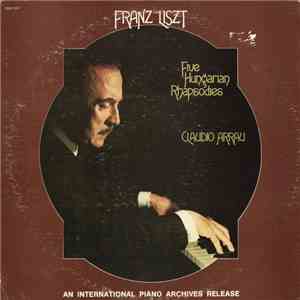 Performer: Franz Liszt
Title: Five Hungarian Rhapsodies
Style: Romantic
MP3 album: 1351 mb
FLAC album: 1386 mb
Rating: 4.4
Other formats: APE TTA ADX DTS WAV RA VQF
Genre: Classical
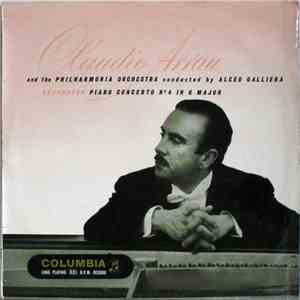
These performances, recorded by Claudio Arrau for the Columbia Record Company on October 24, 1951 and February 22, 1952, have not been released before. The original monaural recordings have been remastered to today's highest technical standards without the use of artificial stereo.
Hungarian Rhapsody No. 2 in C-sharp minor, . 44/2, is the second in a set of 19 Hungarian Rhapsodies by composer Franz Liszt, and is by far the most famous of the set. In both the original piano solo form and in the orchestrated version this composition has enjoyed widespread use in animated cartoons. Its themes have also served as the basis of several popular songs.
Liszt: Complete Hungarian Rhapsodies. Liszt: Complete Hungarian Rhapsodies (2 CDs). Liszt: The Complete Etudes. Liszt: Hungarian Rhapsodies Complete. Sample this album Artist (Sample). 1. 30. Liszt: Hungarian Rhapsody N. in C sharp minor, . 44.
The Hungarian Rhapsodies, . 44, . 06 (French: Rhapsodies hongroises, German: Ungarische Rhapsodien, Hungarian: Magyar rapszódiák), is a set of 19 piano pieces based on Hungarian folk themes, composed by Franz Liszt during 1846–1853, and later in 1882 and 1885. Liszt also arranged versions for orchestra, piano duet and piano trio
Album including Album cover. Claudio Arrau When Arrau was a year old his father died. His mother gave piano lessons to support her three children, and after Claudio made his debut at the age of five she moved the family to Santiago de Chile so that he could study with Bindo Paoli. By 1911 the Chilean government had decided to fund Claudio’s training in Berlin. At the Stern Conservatory he studied with Martin Krause (1853–1918), a pupil of Liszt. 16. Some fine Liszt recordings were made in 1952, including five Hungarian Rhapsodies and the Piano Concerto No. 1 with Eugene Ormandy and the Philadelphia Orchestra. In 1952 Arrau recorded Beethoven’s ‘Diabelli’ Variations Op. 120 for Brunswick in New York, and a year later embarked on a recording project of the complete piano works of Chopin.
Franz Liszt: Hungarian Rhapsodies. Released by Black Sheep Music Oct 2012 8 Tracks. Franz Liszt: Hungarian Rhapsodies Album has 8 songs sung by Royal Philharmonic Orchestra, Franz Liszt, Artur Pizarro. Listen to all songs in high quality & download Franz Liszt: Hungarian Rhapsodies songs on Gaana. attr("src", $('. de tp.
Franz Liszt's Hungarian Rhapsody No. 6 (S. 244/6), for solo piano, composed in 1847. Liszt dedicated the piece to Count Antoine of Appony. It uses the form of Lassan and Friska like many of the other Hungarian rhapsodies, with in this case a tempo giusto introduction. The work draws on five different folk themes, and was so popular that the original version for piano was soon arranged for violin and piano, for piano four hands and also for orchestra. Liszt - Hungarian Rhapsody No. 15 (Rákóczi March). Pro. 1 part, 12 pages, 05:56, 4 months ago, 398 views. Franz Liszt's Hungarian Rhapsody No. 15 (S. 244/15), for solo piano, composed in 1853 and sub-titled the "Rákóczi March". The Rákóczi march is often referred to as the Hungarian Marseillaise.
Tracklist
| A1 | No. 11 A Minor |
| A2 | No. 10 E Major |
| A3 | No. 8 F Sharp Minor |
| B1 | No. 9 In E Flat Major |
| B2 | No. 13 In A Minor |
Companies, etc.
- Distributed By – Desmar Records
Credits
- Art Direction – Paula Bisacca
- Composed By – Franz Liszt
- Design – Judith Bookbinder
- Piano – Claudio Arrau