The 13th Amendment - Hard To Be In Love album flac
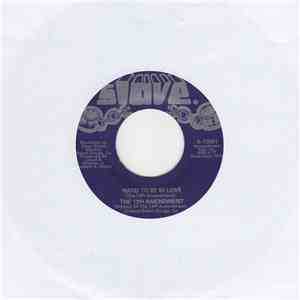 Performer: The 13th Amendment
Title: Hard To Be In Love
Style: Funk
MP3 album: 1437 mb
FLAC album: 1333 mb
Rating: 4.3
Other formats: AIFF ASF AUD AA VOC MP3 AC3
Genre: Funk and Soul
The 13th Amendment was proposed in part because of well-founded fears that the Supreme Court might nullify Abraham Lincoln’s Emancipation Proclamation. But the exception clause of the 13th Amendment was a convenient sleight of hand, said Dennis R. Childs, an associate professor at the University of California at San Diego and author of Slaves of the State: Black Incarceration From the Chain Gang to the Penitentiary. Prisoners have been protesting this clause for decades. Sumner got his told-you-so moment in the years after the amendment’s passage, Childs said, when states started using the 13th Amendment to re-enslave people convicted of crimes for a term of years, selling them at auction to the highest bidder.
The Thirteenth Amendment to the Constitution of Sri Lanka (13A) is amendment to the Constitution of Sri Lanka which created Provincial Councils in Sri Lanka. On 29 July 1987, Indo-Sri Lanka Accord was signed between Indian Prime Minister Rajiv Gandhi and Sri Lankan President . Jayewardene which stated the devolution of powers to the provinces
The 13th Amendment to the . Constitution, ratified in 1865 in the aftermath of the Civil War, abolished slavery in the United States. The 13th Amendment states: Neither slavery nor involuntary servitude, except as a punishment for crime whereof the party shall have been duly convicted, shall exist within the United States, or any place subject to their jurisdiction. Founding fathers and slavery.
Penal labor in the United States, including a form of slavery or involuntary servitude, is explicitly allowed by the 13th Amendment of the . This form of legal slavery is only allowed when used as punishment for committing a crime. The 13th Amendment states that "neither slavery nor involuntary servitude, except as a punishment for a crime whereof the party shall have been duly convicted, shall exist within the United States, or any place subject to their jurisdiction.
The House Joint Resolution proposing the 13th amendment to the Constitution, January 31, 1865; Enrolled Acts and Resolutions of Congress, 1789-1999; General Records of the United States Government; Record Group 11; National Archives. Passed by Congress on January 31, 1865, and ratified on December 6, 1865, the 13th amendment abolished slavery in the United States and provides that "Neither slavery nor involuntary servitude, except as a punishment for crime whereof the party shall have been duly convicted, shall exist within the United States, or any place subject to their jurisdiction.
The 13th Amendment to the United States Constitution, ratified just months after the end of the American Civil War, abolished slavery and involuntary servitude-except as a punishment for a crime-in the entire United States. Two Centuries of Slavery in America. While the Declaration of Independence of 1776 and the . Constitution as adopted in 1789 both stressed liberty and equality as foundations of the American vision, the 13th Amendment of 1865 marked the first explicit mention of slavery in the Constitution. Key Takeaways: The 13th Amendment. The 13th Amendment abolished slavery and involuntary servitude-except when applied as punishment for a crime-in the entire United States.
The 13th amendment, which formally abolished slavery in the United States, passed the Senate on April 8, 1864, and the House on January 31, 1865. On February 1, 1865, President Abraham Lincoln approved the Joint Resolution of Congress submitting the proposed amendment to the state legislatures. The necessary number of states ratified it by December 6, 1865
Section 1. Neither slavery nor involuntary servitude, except as a punishment for crime whereof the party shall have been duly convicted, shall exist within the United States, or any place subject to their jurisdiction. Section 2. Congress shall have power to enforce this article by appropriate legislation.
Thirteenth Amendent summary: The 13th Amendment abolished slavery in the United States and was the first of three Reconstruction Amendments adopted in the five years following the American Civil War. The 13th Amendment, passed by Congress January 31, 1865, and ratified December 6, 1865, states: 1. 2. Congress shall have power to enforce this article by appropriate legislation