Various - Disco Madness album flac
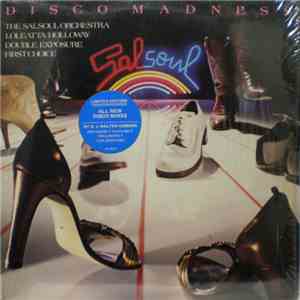 Performer: Various
Title: Disco Madness
Style: Disco
Released: 1979
Country: Japan
MP3 album: 1797 mb
FLAC album: 1424 mb
Rating: 4.7
Other formats: TTA XM MMF DTS MOD MP3 VOC
Genre: Funk and Soul
On this page you can listen to mp3 music free or download album or mp3 track to your PC, phone or tablet. Release title: Various - Disco Madness. Photo of Various - Disco Madness. More albums of Various: New Country Roads Vol. 4. B-Sides Volume One: Blatant Battle Raps. Genre is Electronic Funk, Soul. This album was released on the label Salsoul Records (catalog number SA-8518). This album was released in 1979 year.
Disco Madness - Pop Art. Открывайте новую музыку каждый день. Лента с персональными рекомендациями и музыкальными новинками, радио, подборки на любой вкус, удобное управление своей коллекцией. Миллионы композиций бесплатно и в хорошем качестве. Исполнитель: Pop Art. 2016 trance. Progressive & Psy Trance Pieces, Vol. 17. Various artists.
Madness is a self-titled compilation album by the British ska/pop band. and two single a-sides
Milton Hamilton - Disco Madness (1976). Songs in album Milton Hamilton - Disco Madness (1976).
Listen to Disco Madness - The Original Long 12-Inch Versions now. Listen to Disco Madness - The Original Long 12-Inch Versions in full in the this site app. Play on this site.
ZYX Music, Unidisc AGEK 2495.
Reissue der legendären Compilation -Disco Madness- (1979) mit zu der Zeit innovativen Remixes des DJ/Remix-Pioniers Walter Gibbons von sechs Salsoul-Klassikern. Erstmals in der Musikgeschichte betonte damit ein Sampler die kreative und einflussreiche Rolle des DJ/Remixers in der Dance Music. Groove Line veröffentlicht die Remasters, ergänzt um fünf weitere Walter Gibbons-Remixes, im Original-Artwork. Ein essentieller Release für alle Fans von 70 er Disco!
Love Jack by Disco-matic Express. High on Mad Mountain by The Mike Theodore Orchestra. Magic Bird of Fire (John Morales 2011 Mix) by Salsoul Orchestra. Night on Disco Mountain by David Shire. Jaws by Lalo Schifrin. This track was tagged with the following keywords: Disco. 1 liked it. 1 reposted it. 11 played it. 3 downloaded it. Listen to all music and sounds of AndyJandryGB and follow this user by signing in for free.
Tracklist
| A1 | –The Salsoul Orchestra | Magic Bird Of Fire | 8:04 |
| A2 | –Double Exposure | Ten Percent | 7:07 |
| A3 | –First Choice | Let No Man Put Asunder | 4:44 |
| B1 | –The Salsoul Orchestra | It's Good For The Soul | 7:06 |
| B2 | –Double Exposure | My Love Is Free | 4:54 |
| B3 | –Loleatta Holloway | Catch Me On The Rebound | 7:35 |
Companies, etc.
- Phonographic Copyright (p) – Salsoul Record Corp.
- Copyright (c) – Salsoul Record Corp.
- Mastered At – Sterling Sound
- Pressed By – RCA Records Pressing Plant, Indianapolis
Credits
- Engineer [Remix, Uncredited] – Bob Blank
- Mixed By [Remix] – Walter Gibbons
Notes
"A Walter Gibbons Mix"Comes with a round, white-on-blue record label sticker over the shrinkwrap:
Limited Edition
All New Disco Mixes
By D.J. Walter Gibbons
(Previously available exclusively for disco use)
SA 8518
Barcode and Other Identifiers
- Matrix / Runout (Side A Runout): SA 8518 A, A1, I, STERLING
- Matrix / Runout (Side B Runout): SA 8518 B, A2, I, STERLING
Other versions
| Category | Artist | Title (Format) | Label | Category | Country | Year |
|---|---|---|---|---|---|---|
| OTLCD-5062 | Walter Gibbons | Disco Madness (2xCD, Comp, RE, RM) | Octave Lab | OTLCD-5062 | Japan | 2014 |
| SA-8518 | Various | Disco Madness (LP, Comp) | Salsoul Records | SA-8518 | Canada | 1979 |
| AGEK-2495 | Various | Disco Madness (CD, Comp) | Unidisc | AGEK-2495 | Canada | 2006 |
| SA-8518 | Various | Disco Madness (LP, Comp, Promo, Unofficial, W/Lbl) | Salsoul Records | SA-8518 | UK | Unknown |
| GLRCD 0002 | Various | Disco Madness (CD, Comp, RE, RM) | Groove Line Records | GLRCD 0002 | UK | 2016 |